



About the Park
Bagamoyo
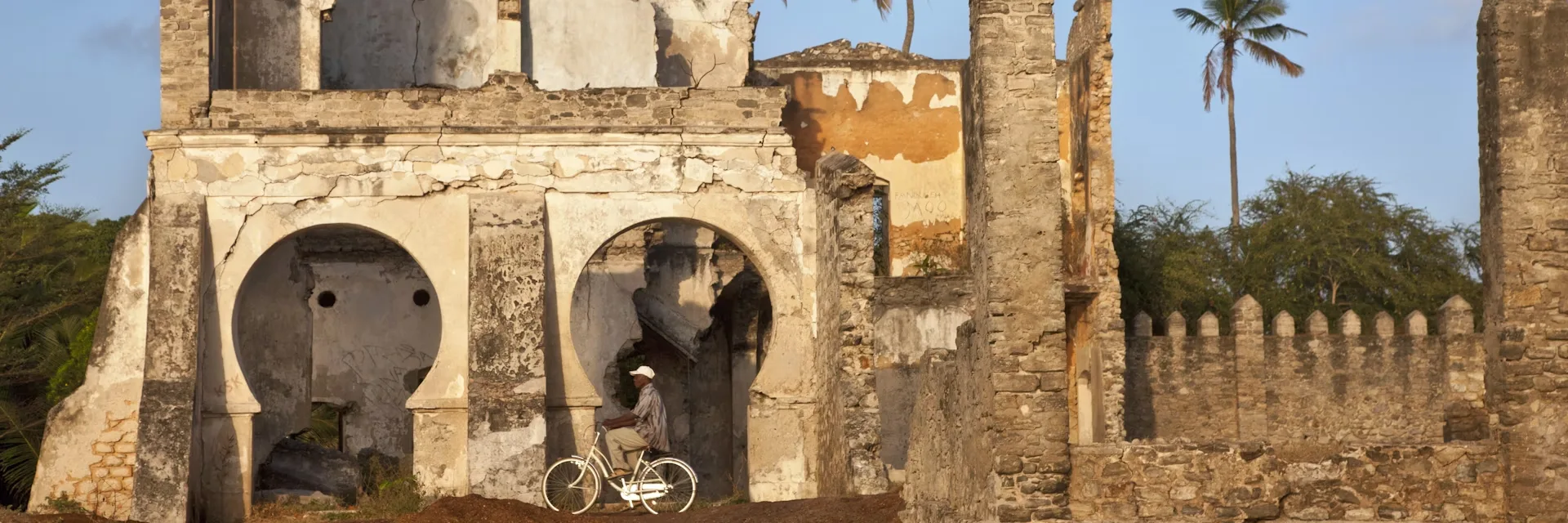
Long before Zanzibar or Dar es Salaam rose to prominence, Bagamoyo was the beating heart of trade on Tanzania's northern coast. Its name is said to derive from the Swahili phrase "bwaga moyo" — lay down your heart — a haunting reference to its role as a 19th-century terminus for caravan routes and, tragically, for the East African slave trade. That layered history, followed by decades as a German colonial capital and Catholic mission town, has left Bagamoyo with a townscape unlike anywhere else on the coast: weathered coral-stone facades, crumbling Arabic and German colonial buildings, and mission churches that still hold Mass today.
Walking the old town feels like moving through an open-air museum. Narrow lanes wind past the Old Fort, the German Boma, and the Catholic Mission with its small museum of missionary and slave-trade history. A short trip south leads to the Kaole Ruins, the remains of a 13th-century Swahili settlement complete with mosque foundations and coral-carved tombstones, set within a quiet mangrove-fringed inlet that is as much a nature stop as a historical one. Local guides, artisans, and craft cooperatives bring the town's living culture into the present, offering woodcarving demonstrations, traditional music, and dance performances rooted in centuries of Swahili coastal tradition.
Beyond the history, Bagamoyo rewards visitors with a coastline that rarely sees the crowds found further south in Zanzibar. Long stretches of pale sand back onto a calm stretch of the Indian Ocean, ideal for swimming, sunbathing, or simply slowing down after days spent chasing wildlife inland. Dhow trips along the shore, quiet beachside walks, and fresh seafood dinners round out an easy, unhurried rhythm that makes Bagamoyo an excellent coastal add-on to a northern-circuit safari.
Accommodation ranges from characterful heritage hotels housed in restored colonial buildings to relaxed beachfront lodges and guesthouses, giving travelers the choice between an immersive historical stay or a straightforward beach escape. Whichever you choose, Bagamoyo's slower pace and tangible sense of history make it a memorable place to decompress after the Serengeti or Kilimanjaro.
Bagamoyo is a year-round destination, though the dry months from June to October are best suited to walking tours and beach time, while the wetter season from November to May brings lush greenery and a more local, festival-driven atmosphere. As with anywhere on the Tanzanian coast, sun protection, comfortable walking shoes for the historic sites, and modest dress for mosque and mission visits are worth packing.